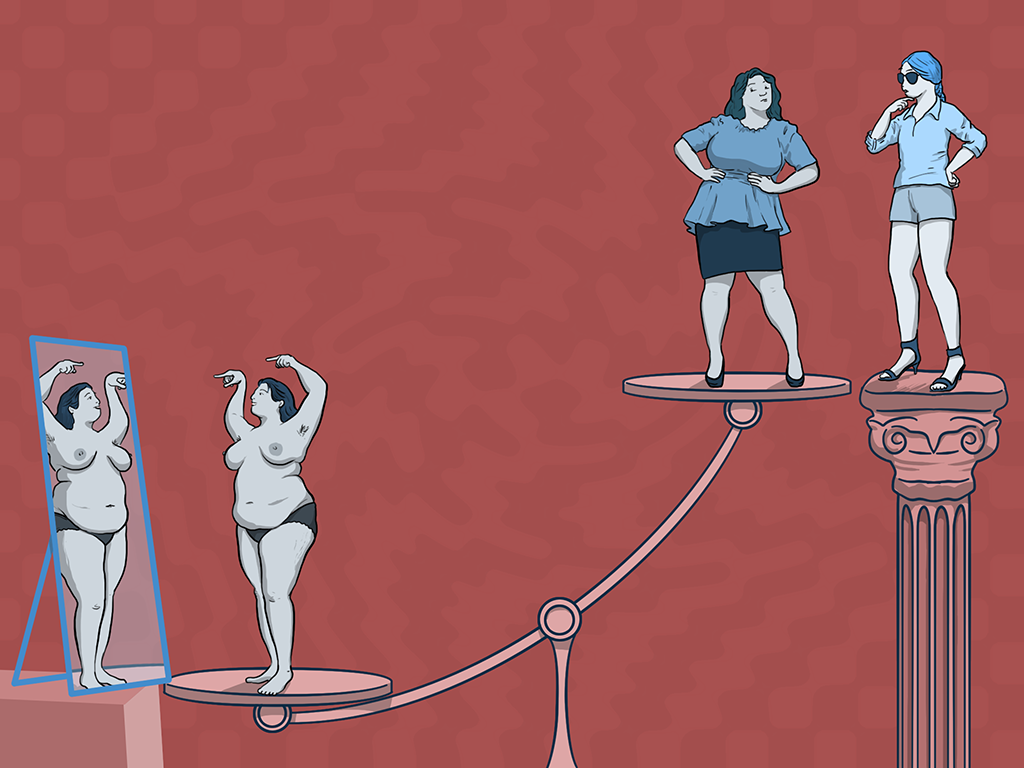
Recent additions to the drug market mean it is now much easier for people who are unhappy with their weight to change it if they’d like to. Ozempic, Mounjaro and other injections have made it possible to lose weight in a rapid and simple way. As always, I want to state very plainly that the shape and size of your body is not a moral question – you are not obliged to be a certain size or look a certain way in order to be worthy of love and admiration. Diet culture is incredibly fucked up, and the way society encourages us to police other people’s bodies is deeply problematic and incredibly harmful to all of us (me included), so you should never feel obliged to change your body if you don’t want to. However, some people do want to, and they choose to use weight loss injections like Mounjaro to help in that process. And holy FUCK do some people want to have opinions about that choice!
I have a personal interest in these drugs, which I’ll tell you more about that at the end of the piece (and in another one later perhaps). But for now I just need you to know that I’m not unbiased in this area. I think that if people can change their bodies in ways that make them happy then they should follow their heart. They should be able to do that freely, without others popping up to spaff their critique all over the place. I know I’m here having an opinion myself, but I reckon that’s legit because my opinion basically amounts to ‘what someone else does with their body is not my concern’.
I change my body when I want to. I’ve been going to the gym lately, like a wanker, and starting to lift weights that make me feel powerful. When I walk past the mirror and catch a glimpse of my strong thighs, I’ve been known to grin about it like an insufferably smug cunt. I’ve also had Botox because I like the way it smooths out my anxiety lines. I have tattoos, because I think tattoos are cool and I wish to be cool one day (fingers crossed!). I’ve had facial piercings since I was 18, much to the misery of my Mum, and I refuse to take those piercings out even though I know some people have even stronger opinions about them now that I’m in my forties. Once, I even got someone to brand my forearm with hot wire – not because I was wedded to the aesthetics, I just wanted to know how it felt.
I like to do shit to my body sometimes, and although you’re more than welcome to ask curious questions about why I chose this or that tattoo, or compliment my adjustments if we’re friends, you don’t get to comment on the choices as a whole. The answer you’ll get if you ask ‘why botox?’ or ‘why the nose ring?’ is: because it’s my body and I’ll do what I like.
And so to Ozempic. Or Mounjaro. Or whichever weight loss drug your friend is taking that makes you want to purse your lips in judgment. I’ve seen a fair bit of this judgment lately, usually couched in tones of concern. These tones echo the exact same vibe that used to be conjured when – during fat periods in my own life – a ‘helpful’ relative would ask me if I’d considered maybe trying a different diet. I find so many of these ‘caring’ objections odious and dishonest, so I thought I’d haul out my soapbox and address a few of them.
Your objections to weight loss drugs
“I just worry because it’s a quick fix”
Too easy, eh? You expressed concern for your fat friend’s health when you were nagging them to join your insufferable running club, but now there’s a drug that will allow them to lose weight easily, your concerns have magically changed shape.
Maybe it’s time to consider what you’re actually upset about. Are you really just annoyed that your friend hasn’t had to put in whatever work you think you’ve done in order to be thin? Are you worried that Mounjaro shouldn’t be allowed because it’s cheating?
Why not say what you really mean? You think thinness should be earned through ‘virtue’. Salad and exercise – no shortcuts!
“I’m concerned about the long-term effects of these drugs!”
Scientific minds are working on this. I doubt your snide comments at a party will be included in the peer-reviewed research, so pipe down.
Besides, are you concerned about the long-term effects of the way your thin friends choose to live? Are you lecturing runners about knee problems or nagging cyclists to wear a helmet?
“But won’t they have to take it forever?”
Maybe! Your diabetic friend might have to take insulin forever too, though. If you’re that concerned about such matters, go and do a medical degree about it.
“Eating is a social activity! You have to join in!”
A recent article in Cosmo discussed this phenomenon: people starting to lose their social lives along with their appetite, as they could no longer ‘join in’ with meals the way they used to.
Grace wasn’t just dealing with her own discomfort; her friends started noticing, too. “I’m usually the life of the party,” she says, “but it was pretty obvious that I was on [GLP-1 drugs], because I wasn’t hungry at all.” Comments started coming at her thick and fast. “‘You never finish your plate anymore’; ‘Why are you trying to be skinny? Just eat the burger.’”
I can’t actually imagine saying something like this to a friend when we’re eating, but apparently people do. Apparently it’s a thing. Apparently ‘not finishing up all your din dins’ is now a social crime deserving of public shaming as opposed to, say, a very common choice that your thin friends will have made many times in the past without ever receiving critique.
With most of these objections, it can be helpful to ask yourself whether you’d extend the same judgment/questions to someone you know who has always been thin. Are their choices up for discussion in the same way your fat (or ex-fat) friends’ choices are?
The truth is that just as with alcohol, drugs or any other item, your friends don’t need to consume the same as you in order to be worthy of love and community. We’re not fifteen years old any more, trying to peer pressure our mates into puffing on a joint behind the bike sheds. If you’re pressuring your friends to consume anything – food, drinks, drugs, whatever – then it’s you who is killing the vibe! You’re the one being antisocial! Let people live their lives!
“It gives a false impression of how easy it is to lose weight!”
One of the things I’ve heard people complain about when it comes to weight loss drugs, and it pops up in the Cosmo piece too, is the fact that often those who are taking them don’t talk about it openly. Some will choose to tell people that they’ve just been eating differently rather than acknowledging that their weight loss cost a few hundred quid a month and a weekly injection.
Hmm.
I understand the desire for honesty on a social level, because I am the kind of person who makes an obsessive, aggressive point of telling people what I’ve changed about my body. These days if anyone tells me I look good, I reply:
“Thank you, it’s botox!”
So I get where people are coming from. They want more open discussion about weight loss drugs, because they don’t want everyone to think that being thin is easy (it is not). However, while I understand this point in the general sense (we need to avoid making weight loss drugs such a taboo subject that no one ever mentions them), on an individual level the blanket rule still applies: someone else’s body is not yours to critique. If your friend doesn’t want to talk to you about their weight, they don’t have to. You don’t get to demand it. Perhaps they actually are talking openly about how pleased they are with Ozempic, you’re just not privy to that conversation because you’ve made your judgmental outlook clear in the past.
The only time it’s OK to have this opinion out loud is if you are the one on the drugs. By all means feel free to spread the word, educate, whatever you want to do… but only if it’s your body on the line.
“So are we spreading the message that people just HAVE to be thin now?”
Lol. We’ve told people that for decades. That might be part of why your friend chose to take the drugs in the first place. Health reasons could be in there, but let’s not pretend that relentless societal pressure to look a certain way hasn’t had any influence on how popular weight loss injections are.
Do you know what, though? The weight of responsibility for this extremely fucked up attitude towards body size and shape isn’t something your friend is going to be able to change on their own. Society will continue to hate on fat people regardless of your friend’s individual medical decisions, so you can help by… shutting the fuck up about other people’s bodies, as well as their choices when it comes to Mounjaro or whatever it might be.
If you’re choosing to interrogate your friends about whether they take weight loss drugs, and insisting on having opinions that were never solicited in the first place… I doubt you’re the social crusader you’re painting yourself to be. In fact, I think these objections usually come from the same place that fat shaming seeped from before.
The most common problem people have with weight loss drugs is an unspoken one, I think. And it’s this:
My fat friend isn’t fat any more and that gives me difficult feelings!
I believe a lot of the objections about weight loss drugs amount to ‘I am uncomfortable that my friend lost weight, and now the relationship they have with food/their body is giving me difficult feelings about my own.’
To be honest: I feel this myself. It is hard to acknowledge, because it is ugly, but I’m going to have a go at showing you so you see what I mean.
Someone I love has been on Mounjaro for about six months now. He has changed a lot – both physically and in terms of his relationship with food. I won’t tell you my opinions on the former, I’ll save that for a better blog later down the line – one that contains not a single line of critique, or encouragement to either ‘change’ or ‘maintain’ a particular type of body. But in terms of his relationship to food, I was struck by something that happened the other day when we were making dinner.
We wanted cheese and coleslaw baguettes, and had a two-pack of Marks and Spencer ‘bake at home’ loaves. This blog isn’t sponsored by M&S, but I’ll tell you for free that they’re delicious. Soft on the inside, crispy on the outside, butter melting perfectly when you eat them fresh from the oven. Lovely stuff.
As we were prepping, he turned to me – this man who used to have a bigger appetite than I – and asked:
“We probably only need to bake one, don’t we?”
In that moment, my brain flashed with horror, self-disgust, shame and defensive anger. My thinking ran thus:
How could he suggest we would only bake one? They’re delicious, and perfectly portioned for one baguette each! I’d been dreaming about my whole, fresh-baked cheese and coleslaw baguette! Why would we possibly bother making just one, then cutting it so each of us only had half a sandwich?! What the fuck?!
Maybe… I am wrong? Maybe all these years I’ve been eating twice as much baguette as I should be eating, and I am somehow gluttonous and unrestrained and gross. Maybe there is something wrong with me. I am Bad and Greedy and I want to eat too much bread. Maybe he thinks that I am? How dare he! I’m perfectly fine, and I deserve my bread, goddammit!
This is all a tangle of problematic bullshit, obviously. Firstly, eating one of these baguettes is a completely normal thing to do. Eating half is a normal thing to do too, if you only fancy half a sandwich. It is not bad or greedy for me to want more, as it is not bad or unhealthy for him to eat less. There is nothing wrong with each of us eating exactly what we need. I am not gluttonous and he is not mean, neither of us is making a moral choice worthy of judgment, nor a judgment about the other person’s choice – we’re just satisfying the individual needs of our bodies.
Food is emotional, and so are we
I was ashamed of these feelings because I realised that although I know on an intellectual level that they are harmful nonsense, there is still an emotional response to someone suddenly eating far less than I do. It makes me feel a certain way. The emotions it triggers are all rooted in bullshit societal expectations about weight (it has a moral value, and the bigger you are the ‘worse’ you are as a person), layered with gendered expectations about women (we should eat less than men), combined with a personal worry that someone I love might be judging me on my food choices.
I think most of the objections people pipe up with when it comes to weight loss drugs are also rooted in emotional responses to food. Maybe your ‘worries’ about your fat friend’s health are actually just repackaged feelings about your own relationship to weight. Maybe your ‘concerns’ about what will happen when they come off Ozempic are actually ill-disguised hopes that they’ll put the weight back on and get the ‘punishment’ they deserve for ‘overeating’. Maybe something ugly inside you is disappointed to realise you can no longer feel superior to the friend who used to enjoy two helpings of pudding.
The way I feel about this guy’s Mounjaro-induced eating habits could easily be framed in terms of care for him, but actually they’re all about me. I see him being restrained in portion sizes and I panic, thinking ‘fuck, should I do that too?’. I see him putting chocolate down after one or two bites and envy the fact that he can. I feel guilty if I’m still peckish and I polish off whatever food he has left. These feelings are very hard to quash, and they’ll keep popping up: every time he places a bag of Haribo aside but I want to keep eating; when he just orders a starter at a restaurant while I tuck into two courses and four cocktails; when I hunt for snacks in his fridge and find nothing but Coke Zero. I will feel… greedy. Like I have less willpower than him, and therefore am less as a person.
Acknowledging these feelings does not mean I have to indulge them though. They are irrational. Allowing them to spill out into the world – by commenting on what he’s eating or interrogating why he’s lost his appetite – is a harmful thing to do. Having feelings about someone else’s body or eating habits doesn’t necessarily make you a terrible person: it means you’re a normal person living in a society that actively encourages us to police each other. You can avoid becoming a terrible person by keeping the more hurtful thoughts to yourself. Recognising the emotions that sit behind them, and refusing to perpetuate the cycle of harm that caused those to bubble up in the first place.
Your friend might have lost weight pretty quickly, and that might give you some feelings. Those feelings are valid, and well worth examining, but the negative or critical ones aren’t things you need to share. They certainly aren’t things you should wrap in faux concern so you can ‘just ask questions’ that are really emotionally-driven kneejerk judgments in disguise.
Feel however you feel about weight loss drugs, but just as with any other thing someone chooses to do to their body, ultimately it’s their choice: not yours.
Nothing in this blog, or the comments below, constitutes medical advice. Consult with a doctor before taking any medication like this.
27 Comments
I have been on Mounjaro for a year now, it was prescribed due to my Type 2 diabetes as I wasn’t reacting well to the pill treatments I was on, despite changing my eating habits.
It worked well in that it effectively reversed my HBA1c score so now I’m classed as prediabetic, I also lost some 4 stone on it too, but that was a side effect of taking it, not the reason.
There are side effects (burps are really fun…) but the whole “changing my eating habits” was well established when I went on it.
Lifting weights is great, better control of what I eat where I don’t feel I’m actually missing out on anything much and I’m healthier now than I was 10 years ago.
It’s interesting seeing people’s reactions to the idea of GLP-1 drugs and what it says about how we view both ourselves and each other.
Ohh does it make you burp? or just give you *different* burps? I’m intrigued and I’m gonna ask the dude I know who’s on it to see if he gets the same thing! I’m so glad for you that it’s helped you to get where you want to be, and yeah I think the availability of these drugs has thrown up a whole lot of emotions/opinions that are interesting to examine. I hope the people in your life are supportive, and thank you for sharing!
I was also prescribed this for type 2 diabetes and it completely destroyed my testosterone levels and thus sex drive. Testosterone supplementation was not enough to fight it. Never again!!! Pleasure is too precious.
Ouch, I’m so sorry that happened to you. That does sound appalling. I had fucked up sexual side effects when I was put on SSRIs for the first time – I lost the ability to come https://www.girlonthenet.com/blog/sex-sertraline-zoloft-masturbation/ Fucking awful and important that doctors warn people about potential side effects. I don’t want to pry at all but I’d be curious to know – did you get any warning about this at all? Have you stopped taking it, and has your drive come back? As I say, I don’t want to pry so no pressure to answer if you don’t want to, I’m just curious. I hope that things are better for you now <3
‘Scientific minds are working on this. I doubt your snide comments at a party will be included in the peer-reviewed research, so pipe down.‘
I don’t think framing legitimate concerns and data about health risks – especially as petulantly as that – helps anyone.
And by supplanting reason with bruised egos, you tank the reader’s confidence in your judgement.
Not good.
So. Hmm. I’ve thought about this because I think you’re in earnest and I’m always up for examining where I might be being a dick. I think you’ve got a point when we’re talking in general, but even after reflection I’m going to stand by my framing here. Is there legitimately a reason to be careful about introducing new drugs to the market? Yes. Are these concerns, when raised directly with people who have chosen to take these drugs after consultation with a doctor, always coming from a legitimate place? And for useful reasons? No.
We have drug regulation, at least here in the UK, and things need to meet a certain standard in order to be offered to patients. Patients should be informed of the side effects, as well as possible long term risks. And even if their medical practitioner is rubbish, it’s extremely unlikely that people choosing to take these drugs have not considered this themselves.
To raise this question in a general sense, as you would with any other medication, is understandable. To raise it to a friend who hasn’t directly asked for your advice is – I think – patronising and rude.
While we’re on the subject of effects, do you know the long term effects of all the drugs your thin friends take? I just think that laypeople are often more likely to raise ‘concerns’ about the bodies of our friends if those friends have bodies that sit outside what we have been told is ‘correct’.
As I say, I’ve considered your criticism and I’ll keep pondering it, but right now I do think you’re wrong. The context in which this question comes up is usually not one where it’s helpful or kind.
I mean, yeah, *for me* I am so far not taking these drugs because I am worried I would need to be on them forever. And if someone was foolish enough to try to pressure or persuade me that’s what I’d say. But my friends who are taking them – I trust their intelligence and that they have done their own risk/reward calculation about doing so. If they come to a different conclusion than I have, that’s fine. It’s not helpful to push my concern onto other people.
Exactly this! Thanks, LK!
Much like your commenter SwoleBear, I too was prescribed Mounjaro as a type 2 diabetic who had not tolerated some of the ‘first line’ treatments well. I had previously been on Ozempic for the same thing and reacted horribly, so when they tried to put me on Mounjaro I was devastated. But I decided to try, for the sake of my health.
In almost all ways, it has been a game-changer. Over the last 1.5 years I’ve lost just under 3.5 stone, which was enough to take from ‘obese’ to ‘just overweight’ (according to the NHS’ helpful BMI scores..!) More importantly, my blood sugars are now reading at pre-diabetic level, and my cholesterol has gone down to 4 (from 6).
And yet one of the most interesting and difficult things to navigate with all of this, is most of what you mention in your post (excellently observed, by the way!).
I know quite a few people who are now taking mounjaro for weight loss. I also have a few friends who are clearly quite uncomfortable with it. Some things in your post that particularly rang true for me:
1. People seeming to judge weight loss by GLP1 inhibitors as ‘cheating’ and not ‘earned’. Some friends have openly stated this, knowing I’m on them myself (but it’s okay for me… Because I’m on them for diabetes, not specifically weight loss…) Some of those friends could afford GLP1s if they wanted, and importantly, some couldn’t. Yet the judgement is still there in both cases.
2 It is clear to me that some of my friends have not enjoyed the transition to me not being their ‘fat’ friend anymore. (I am still not skinny, but definitely more ‘average’ now). I have heard many comments about ‘how the tables have turned’ (when I asked to borrow a piece of clothing but my friend said it would be too big for me), and how they are ‘watching their friends all shrink around them’ etc. It’s been interesting to see the people closest to me clearly feel discomfort with my changing body, and frankly it is a little hurtful.
Finally, just as a note from someone who LOVES her food… Being on Mounjaro has not been an easy journey, mentally or physically. At the start, side effects can be difficult (I spent many nights sitting up with a bucket feeling like I was going to be sick). Not being able to find comfort in food when it is a key source of comfort can be really difficult. Seeing people’s changing attitudes to you as you get skinnier (my parents suddenly love me more, my best friends are upset) even though you just want to not die early from diabetes.
And in total honesty – the weight loss has caused me to have some saggy skin on my neck. I’m 40 years old and my neck looks about 55, and it is bothering me so much that I have two consultations with a plastic surgeon, despite being without the means to actually pay for surgery (don’t worry, they offer credit!). Despite my desperate desire to be body positive and love my new body, I have just developed a new, all encompassing thing to hate about myself.
Society has a lot to answer for, huh?? Anyway, great article – and eat the bread. Omg those bake in the oven loaves are manna from heaven.
“my parents suddenly love me more, my best friends are upset” – this has absolutely destroyed me. I am so sorry. And so angry. It’s awful the ways in which our bodies are apparently considered indicators of our value as people, and I think that the fact more people are changing their bodies as a result of these drugs has cast light on some of the uglier aspects of people’s attitudes. I hope your friends get on board and your parents remember you’re incredible and worthy of love regardless of size. I’m so glad that it has helped you manage your diabetes better, but sorry about the neck thing. There will always be something we end up hating ourselves for, I think, and that’s the fault of our shitty discourse too. Blergh.
The comfort-in-food thing hadn’t occurred to me, so thank you for raising it – that must have been really tough. I’m not sure how I’d go about dealing with that, though as someone who is addicted to nicotine who’s been super curious about how/whether similar things could help me quit vaping… it’s interesting to consider how I’d deal with that. Not reaching for this thing that I go for every time I need *something*… hmm. Yeah. We humans do need our comforts, innit.
Thank you so much for sharing <3
One of my best and oldest friends has been taking one of the jabs for about year. The newfound confidence and energy (which she attributes to the jabs) and, by extension, the ability she’s found to question some of her wider relationship/location/life situations and take steps to make herself happier in other ways has been a joy to see. Sometimes a quick fix is exactly what you need to get started on other, more structural, changes and there is nothing wrong with that.
Ohh yeah, I see what you mean. I think in relation to my friend who has been taking them… there’s definitely a change in his outlook/attitude which feels like he is a bit more powerful (or at least, he can perceive the power he has to make his own choices) and that’s no small thing. Thank you for sharing!
Great piece, thank you. My wife has lost a lot of weight thanks to weekly injections of GLP-1 and I’ve definitely been guilty of the “quick fix”, “long term effects” and the “too easy” thoughts. It’s cured her sleep apnea, which is huge but it’s also given her chronic constipation, so I’m also a little torn each week when she asks me to give her her shot, she hates needles.
Unfortunately our marital issues have put a dent in our ability to communicate honestly about such delicate matters, the pros and cons, she’s obviously pleased with the results so I’ll keep my negative thoughts to myself and loading up the syringe when asked.
Yeah I think this is the best way to go – trust that your wife has had the conversations she needs to have, and don’t offer unsolicited advice/critique of the choices. There’s a huge difference, I think, between broad discussions about this kind of thing, and personal ‘advice’ or questions that often make the person whose life/body is on the line feel belittled. I am so glad for her that it’s helped with apnea, and I hope the constipation wanes soon too.
I was prescribed it after putting on a lot of weight over successive rounds of fertility treatment, which tests revealed was (ironically) affecting my hormones. Mounjaro sent my heart rate through the roof 24/7 (like, up by 25bmp) which meant that I physically could not sleep, even when heavily medicated. Being artificially kept awake night after night is absolutely one of the worst things I have experienced. And because each injection stays in your body in some form for a month I was stuck with it; there was no fix beyond waiting it out. The damage that just two jabs did to my autonomic nervous system, mental health and life in general (I lost my job and my relationship ended) was catastrophic: my hormones tanked, I became anaemic, I had to go on multiple new medications to try to get back to normal. There is a Facebook group for people who have had similar severe mental/physical health reactions which has tens of thousands of members. Their experiences are unusual but anyone considering GLP1s should be aware of the possibility. These are very powerful brain drugs and doctors are still learning about how they actually work.
Hey, thank you for sharing – I am so sorry that happened to you. I definitely don’t recommend people who are worried about this join a Facebook group about it, but it is definitely worth raising with their medical practitioner if they want more information about potential side effects before choosing to take or not take these drugs. I hope that things get better for you, and I appreciate you sharing your experiences.
My doctors never flagged what I experienced as a potential side effect, even though they later acknowledged it. Medical research is beginning to catch up but here in the UK GPs simply do not have the time to keep up to date with all of it thanks to chronic NHS underfunding. I’ve been a huge fan of your writing for years but this weird puff piece you’ve written about these still new and unpredictable (and often misused) drugs, plus the tone of your replies, is pretty troubling tbh. Not sure what the motivation is beyond getting more traffic? Odd and irresponsible use of your platform imho. I really hope you never have to experience anything as medically frightening as what I went through.
There are a few things here I’m gonna tackle them individually:
“My doctors never flagged what I experienced as a potential side effect, even though they later acknowledged it”
This is absolutely crap, and you have a lot of my sympathy – I’ve had similar experiences with SSRIS, where acknowledged side effects were not raised with me at the time they were prescribed. You won’t get any argument from me about NHS underfunding – the NHS badly needs more funding so that GPs have more time to give detailed information to patients. Most people I know who are on these drugs have sought them privately, but regardless: the NHS should have the resources to properly discuss the details of treatment options with patients. There are many many many drugs, surgeries and other interventions that have significant risks, side effects, etc. I stick to what I said before though, that joining a Facebook group is not the way to get accurate medical information. I am sorry that doesn’t feel appropriate to you, but that is what I believe and I didn’t want to leave that suggestion unchallenged in my comments section.
“this weird puff piece you’ve written about these still new and unpredictable (and often misused) drugs” – Hmm. It’s a ‘puff piece’ about the drugs, is it? Odd. At no point do I recommend anyone takes them, and I would never suggest people take or not take anything specific because I’m not a medical expert. I’m also writing on a broad platform and everyone’s different. I would no more say ‘you should take X’ than I would say ‘you should have sex in exactly the way I do!’. Also, this should be clear from the piece but let me state it explicitly: I don’t care what people take or don’t take – the point of the article is to explain why it really and truly is none of my fucking business.
What I am doing is questioning people who make judgmental comments to/about people who choose to take them. If someone is taking these drugs and finds that they’re working well and achieving what they want to achieve, then yes I do think that people should leave them alone and stop nitpicking their choices.
“Not sure what the motivation is” – I’ve been explicitly clear what my motivation is: there are people I love who take these drugs (the entire second half of the article is about one of those people!), who have found they work well for them, and so I feel deeply uncomfortable and angry about those who seek to question those choices on grounds that are shaming and judgmental. You’re welcome to disagree with me if you think these grounds *aren’t* shaming (and I’m happy to debate you on that), but outright asserting that you think I’m advertising these drugs is bizarre, honestly. Like you haven’t really read the piece I’ve written, you’ve just decided that absolutely anything other than outright condemnation must by necessity be an advertisement. Or that I have some nefarious alternative motivation. Which brings me to your hilarious guess as to why I might be writing this…
“…getting more traffic?”
Lol. If all I cared about was traffic I’d just write gang bangs and anal. These opinion pieces always get far less traffic than anything horny. I write them because I feel something strongly and I want to talk about it. And the ‘tone’ that you’re taking issue with (what’s the issue with my tone in the replies? I think I’m being pretty gentle, and certainly more open to discussion than you are) is a result of people I care about being harmed by snide comments about the ways they choose to live their lives.
As I said in my first comment, I am sorry that happened to you. It sounds awful. For this exact reason, I would never recommend people either take or not take a particular medication off the back of recommendations on the internet. If a friend of yours came to you to ask about these drugs it would, of course, be appropriate for you to share this information. Likewise if you are worried someone’s going to struggle in the same ways that you did, asking: “would you be interested to hear how these drugs affected me? I had some bad experiences.” would not be wildly off. That’s not what’s being discussed here though, and your experience is blinding you to what I am actually saying: people who take these drugs should not have to run a gauntlet of critique/judgment/questioning that is less about care than it is about control.
Sorry but is this not the same line of argument as ‘criticising anything a woman does is unfeminist’? You cannot separate weight loss drugs from their social and political context and I am surprised that you are trying to here.
Yes of course people should be free to make their own choices about their own bodies. Yes of course these drugs are the right choice for some people.But a lot of peoples concerns about these medications come from a place of fear about the way they are making fatness and existing in a bigger body even more taboo than it was before. The pressure to just ‘go on the jabs’ and stop being fat is significant, from doctors to strangers. These meducines are making it *harder* for a lot of people to just live in their bodies without interference. Also the criteria for proscribing them is BMI, a deeply flawed and racist system that takes no account of overall health. Having those concerns for yourself and other people is not an overreach I don’t think, as you seem to be suggesting.
Honestly this makes me feel really sad about the lovely illustrations on your posts of bigger bodies having a fun sexy time, like they were just there to tick a box, not because this is a genuinely accepting space.
“I want to state very plainly that the shape and size of your body is not a moral question – you are not obliged to be a certain size or look a certain way in order to be worthy of love and admiration. Diet culture is incredibly fucked up, and the way society encourages us to police other people’s bodies is deeply problematic and incredibly harmful to all of us (me included), so you should never feel obliged to change your body if you don’t want to.”
From the opening paragraph to the piece.
I hear what you’re saying, and I agree that no one should ever be forced/pressured to go on these drugs – I’d hope that’s clear from my very strong ‘other people’s bodies are not your business’ message. I’m disappointed that me saying ‘some people choose to do X and that is a legitimate choice’ is apparently enough to make you question all the other very explicit and clear things I’ve said about the beauty of all bodies over the years, though. Especially as – correct me if I’m wrong? – you actually agree with me. From your comment “Yes of course people should be free to make their own choices about their own bodies.” So what is the issue with me saying so? Why is it a problem for me to say ‘people shouldn’t be socially shamed for making this choice if they want to”? Are you upset that I didn’t also say ‘of course no one should be pressured to take them’? Because I *did* say that. So then… are you just upset because that wasn’t the headline? I don’t understand.
“Honestly this makes me feel really sad about the lovely illustrations on your posts of bigger bodies having a fun sexy time, like they were just there to tick a box, not because this is a genuinely accepting space.”
I think you probably know that this is a wild overreach. Especially off the back of a piece that’s fundamentally taking issue with the way people have turned opinions that are rooted in fatshaming into fresh shaming of their fat (or ex-fat) friends for taking weight loss drugs.
You are explicitly saying ‘anyone who expresses concern about people taking these drugs or the normalisation of these drugs needs to pipe down and stop sticking their nose in’, ignoring the often highly personal-political roots of that concern. You are writing as though all of this and these ‘choices’ can exist in an individual vacuum absent of fatphobia, racism, beauty standards etc. This blog has always seemed like a genuinely political and intersectional space so it is really disappointing.
“The answer you’ll get if you ask ‘why botox?’… is: because it’s my body and I’ll do what I like”
…or maybe, ‘because the patriarchy demands I look young to be of value as a woman in society’?
“Choices” do not exist in a vacuum
Ohh OK. If this is where we’re going with this then let’s go.
Yes, my choices about what I do with my body are influenced (heavily!) by society. I examine those choices in that context. If you click through on that botox link you’ll see a blog post where I do exactly that – examine why I have made this choice, and assess the ways in which it was influenced by society, as well as ways my own choice could potentially impact other people. There, as well as in the piece above that you’re objecting to, you’ll see that I make a very deliberate point of telling people I’ve had botox, because I don’t ever want anyone to believe that this kind of thing just happens naturally. I’d do the same if I ever photoshopped an image of myself to get rid of spots on my bum or whatever. Unlike piercings or tattoos (which, incidentally, are also at least partly a result of the same structural issues – I want to be pretty! Cool! Alternative!), it isn’t always obvious that botox is a choice, rather than just naturally the way my face goes. So I make it obvious, because that matters to me.
However.
This is *my* choice, and it is up to me to decide how and when and whether I want to talk about it. With respect, you are never owed an explanation for the choices other people make with their bodies, no matter how strong your feelings are on the issue of what they’re choosing to do with them, and the factors that might influence that choice. I am coming to this topic from a very specific place: I believe very strongly that your body is yours. It is inalienably yours. Of all the things that exist on this planet, nothing belongs to you in quite the same way as your physical self. As a result, nothing on this planet is as worthy of protection (from critique, shaming, judgment, opinions of others, etc) as your body. That remains true no matter what you choose to do with it – even if I do not personally agree with those choices.
Just as I would saddle up and ride into battle to protect my friends from conservatives who believe they ‘should’ use their bodies to bear children if they can, so I am also going to be incredibly defensive of my friends whose bodies are co-opted as weapons in a fight against patriarchy. Even though I support that fight! I am extremely keen to vanquish the bullshit that tells people they have to be a certain way, but I also acknowledge that we all have to live in this society in the meantime, and it would be cruel of me to tell people that they live within structures that cause them harm… and also by the way you have to continue sucking up that harm because I have personally decided that your body is an important tool in the fight against it. The very fact that we’re having this discussion about weight loss drugs but we don’t have the same discussion about, say, ‘going to the gym’ is evidence that we’re holding certain people to different standards. I believe you’re expecting more of someone who is/was fat than you would of someone who has always been thin, and I think that in itself is a harmful and damaging choice.
I can make *my* body a tool in the fight against patriarchy if I want to – though catch me another day, with nuance and understanding, if you want me to talk about the ways I feel I *should* have used my body for this but failed because I am weak and scared. But I do not ever get to make anyone else’s body a tool in that fight. Their bodies are theirs, and it’s not up to me to tell any individual what they should or shouldn’t do.
By all means have objections to these drugs – there are legitimate questions that can be asked (and ARE being asked) about side effects, long term use, etc. As I acknowledge in the piece: medical minds are working on this. But the context in which I am talking about this – telling your friends directly all your Important Opinions about what they choose to do with their bodies – is harmful. It insists on dragging people, who may have spent their entire lives struggling under the crushing weight of societal opinions about their size or shape, into yet another fight that places them in a spotlight they did not ask for and often do not want. So yeah, I maintain that if you’re badgering your friends, loved ones and – in this case – total strangers, about using the drugs, then you have long since lost sight of a very important fact: other people’s bodies are not your business.
If this doesn’t persuade you to examine your position, then please indulge me in a hypothetical:
Let’s say your hypothetical fat friend hadn’t been taking Mounjaro, but had instead been going to the gym. Would you insist on telling them that their choice doesn’t exist in a vacuum outside of fatphobia, racism and beauty standards? Do you lecture your friends who have always been thin on the ways in which their thinness feeds into bullshit societal expectations around beauty? If you had a friend who was young-looking because they had a radically brilliant skincare routine that they’d stuck to since they were a teenager, that they should consider those choices in light of the fact that ‘patriarchy demands they look young’?
I understand where you’re coming from on a societal level, and these things will always be important and worth examining. But the way people (and you, in your comments) are doing it is highly damaging, and feeds into exactly the bullshit that we’re trying to fight against here. Why are your fat friends’ bodies up for debate, but your thin friends’ are not? Why do they have a responsibility to maintain a certain kind of body shape just to prop up what you want society to look like?
If you think I am saying ‘we can never examine our attitudes towards bodies’ then you clearly haven’t read the piece I’ve written. What I have said very explicitly is that you do not get to use your friend’s body as a vehicle for these concerns or objections. They deserve to live their life free from shaming and judgment – no matter what their size, and no matter why their size/shape might have changed. I’m up for being criticised, but if you leave another comment I’m only going to hit ‘publish’ if you can tell me honestly:
Do you voice these same objections when your friends go to the gym?
genuine question, how does your friend feel about you publishing this?
Totally legit question, though I hope the answer is boring and obvious for anyone who’s been reading this blog for a while. He and I have spoken about this in depth, a lot, and I have his consent to write about it. There’s another post in this, which might go up next week or a bit later, which also comes off the back of conversations I’ve had with him. Nothing here will come as a surprise to him, because we had a long conversation about the attitudes expressed in the Cosmo article I link to in the piece. Although most of the time he’s happy for me to just publish without running anything past him, on a topic like this I checked in explicitly because I wouldn’t have felt comfortable discussing this experience without his explicit consent.
He’s very open about taking weight loss drugs, and is kind of similar to how I am with Botox – if someone says ‘you’ve lost weight!’ he’ll go ‘yeah it’s the jabs!’. He also has some pretty fascinating insights about how they have changed his relationship with his own body, as well as how other people have reacted to his changing body. For example, he’s been quite freaked out/surprised to notice that people make eye contact with him in the street now, in ways they did not before. This gives me some feelings (mostly sadness, because he’s always been outrageously hot, and it is gutting to me that some people only notice him now that he’s *also thin*). It gives him some feelings because he does not like strangers making eye contact with him – it makes him feel very observed.
thanks for answering, very interesting to hear of your friend’s experiences, especially re the new eye contact. i took a GLP due to a weight linked medical condition and was one of those for whom it was actually pretty ineffective, which i had and have very mixed feelings about tbh. a member of my family has got on well with the same drug but a friend became really ill and has been in and out of hospital for nearly a year. so i have sometimes advised caution and further research to other friends who have expressed an interest, not because it is any of my business if they want to lose weight or because i think it is a ‘quick fix’ (it clearly isn’t) but because i know first hand that the results can be uncertain or even dangerous. i feel ok about sharing my experience and those of people close to me (both positive and negative) in this way and that it is appropriate rather than policing anyone’s decisions, but certainly a lot to think about. i really believe based on past experiences i am the kind of person to have those discussions regardless of topic. i hope your friend continues to do well and that the conversations continue to be illuminating!
“i have sometimes advised caution and further research to other friends who have expressed an interest”
Fair play, and I think the crux of the issue is contained in this, to be honest: “who have expressed an interest”. As I said to a commenter above, if someone asks for your opinion or expresses an interest in your experience, then of course do share that. It would be weird of you to say ‘I can’t comment’. The comments/questions that I’m taking issue with are the ones thrown at people who have not solicited feedback on their body or their choices.
I’m really sorry to hear about your friend, that sounds awful. I do hope that they’re OK now, or at least on the mend.